

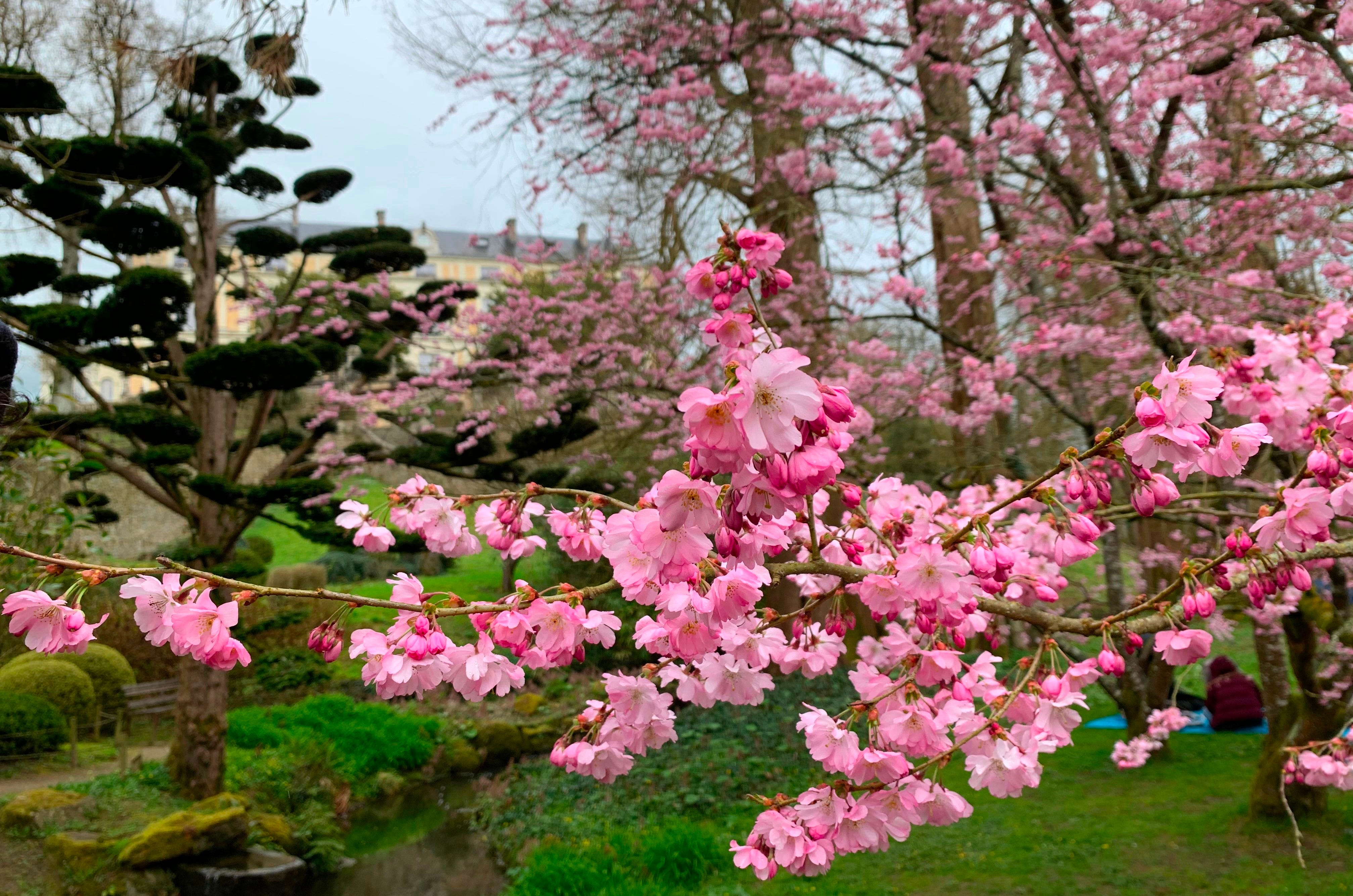
In a Japanese garden not far from Maude’s French river valley, anyone could stroll amongst the sakura in a cultivated landscape. The blossoms, at their peak for a mere two weeks of the year, were a welcome burst of color after months of seasonal gray. Strolling amongst these trees, Maude savored the bold hues, willing the sun to come out and the spring to burst forth from the dregs of winter.
Cherry blossom season prefaced springtime by heralding one of those delicious thresholds of the near future. The blossoms themselves also had a way of gently stirring up long-ago memories. With these came a familiarly soft wistfulness for compounding faraways. It was the time of year when Maude thought of Hiroshima. As a girl, she had stayed with a family there who welcomed her into their home as part of a cultural exchange program. The premise: an organization had assembled international youth embassadors to speak about the humanitarian impacts of nuclear weapons.
While spending a few days with this family—with all the laughter and confused communication and eagerness to exchange similarities and compare differences—it was easy to forget the underlying reason why Maude was there. All the foreign students’ marvelling at the city’s wonders contrasted with a solemn occasion. Seventy years had passed since the city’s name made history for the most tragically catastrophic of reasons.
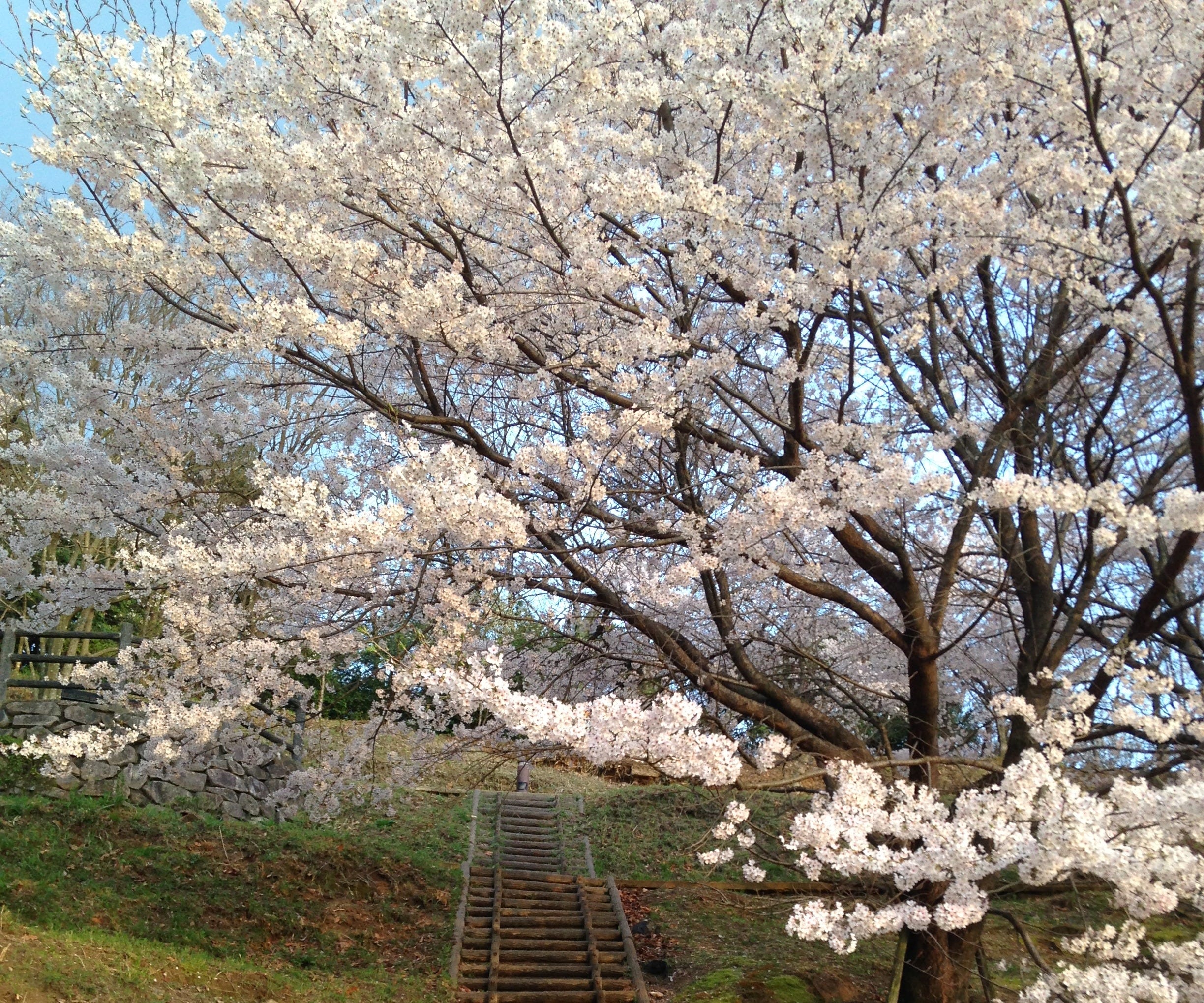
But even that occasion was a long time ago, and Maude had lost her detailed know-how of nuclear winter and atomic close calls and all the morbid details that had been in her ambassador’s arsenal at the time. What stayed with her were recollections of the city itself, glistening and full of life. Lights and colors everywhere at all times of day. The okonomoyaki pancakes perfected into a local staple since the wartime scarcity that necessitated their invention. And, of course, the Peace Park. In the middle of that park stood a tree which had survived the blast in 1945. Maude gazed upon it for long time, transfixed by its liminal mortality which defied the egoism of the human impulse to destroy.
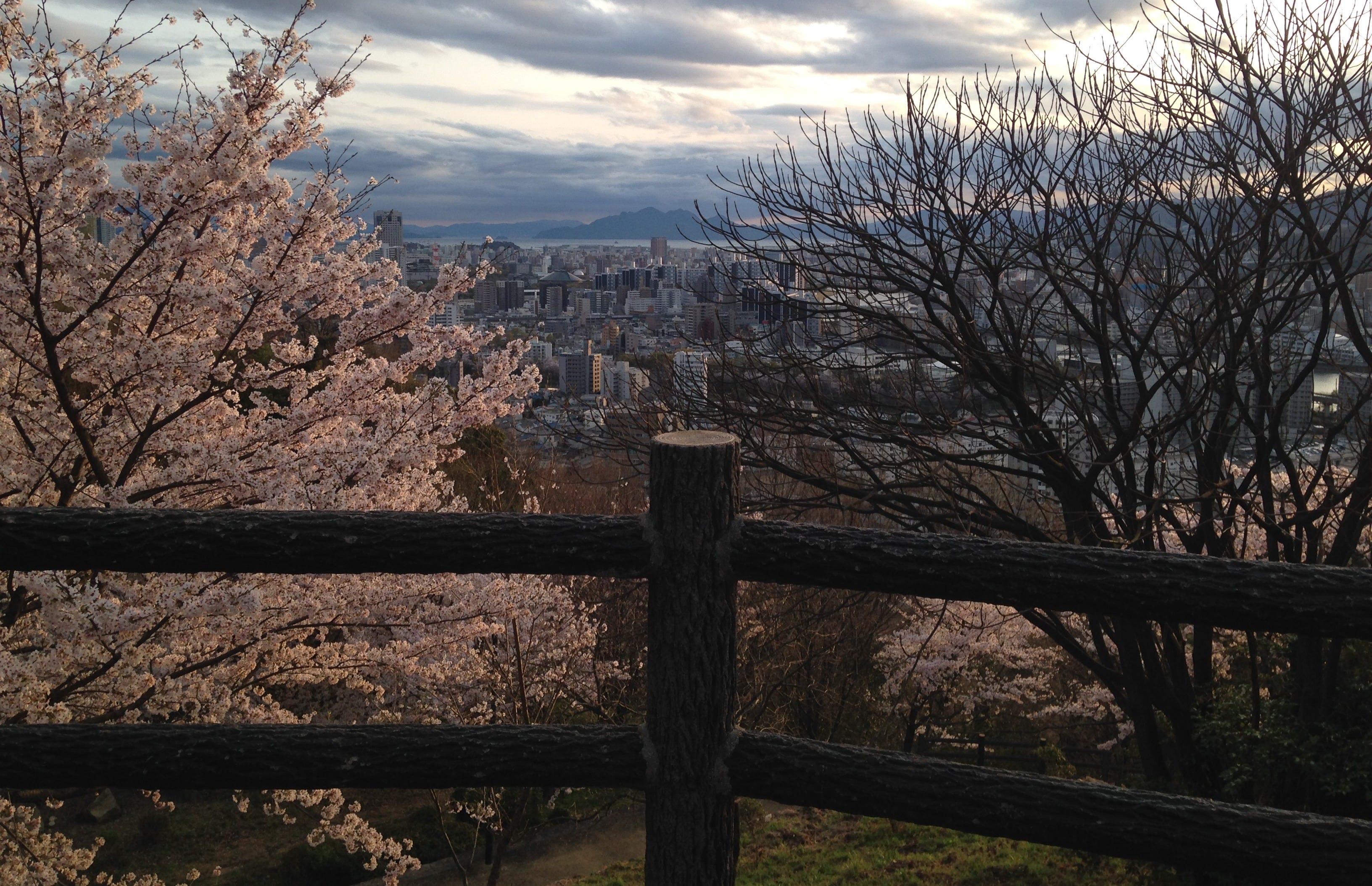
All over the city other trees left an impression as well. Cherry blossoms fell that week, covering the ground in pale-pink snow and filling the air with a sweet promise. On the hillside above the street where Maude’s host family lived, there was a cherry tree forest overlooking a view of the city skyline. At sunset, when Maude and the daughter walked up to the top of the hill and meandered through the trees, the light filtered through the flowers in a vibrant flash of dusky peace. Both girls had been shy, and reticent to speak even just a few words of the other’s language. But traipsing through those trees together, they did not need words to express their shared marvel at the fading sunlight turning the pink and cream blossoms into rose gold.
Maude would only see so many cherry trees again while living in Baltimore. In late March, she and Margaret would take the train down to DC to experience the thousands of trees in bloom. They had been a gift from Japan in 1912, a turn of the century gesture of friendship. A friendship forgotten, however, in the liminality of multiple wars which came not long after, during which all participating nations did many unforgiveable things.
But the people descended from these quarrelling histories were not necessarily the ones who had been unforgivable. When Maude and the other students were in Hiroshima, friendship blossomed amongst them as they discovered another culture and discussed the mistakes of their forebears. These had been instantaneous connections, formed quickly, without inhibition or prejudice, in a shared awe for the newness and resilience of such a dazzling place. These friendships were, perhaps, the proof that pasts could be forgiven for the sake of the future. How was it that nations historically at odds against one another could remain so, when their children simply walked side-by-side in laughter?
This did not go unnoticed by the adults overseeing the young travelers in Hiroshima. They praised the youth’s potential and declared in smiling platitudes that this gave them hope for the future. But even back then, something had always seemed strange about the insistence that it would have to be the next generation to right the compounding wrongs of its predecessors. All this talk of the future left very little consideration for the present. There seemed few things more humbling than children solemnly taking responsibility, wihout question, for adult mistakes. And there seemed few things more unjust than bestowing the responsibility of correcting these mistakes onto children who had nothing to do with their inception.
Maude had always regretted falling out of touch with her host family. Technological glitches had severed contact more surely than a lost letter in the mail. But she thought of them each springtime in the Mid-Atlantic, when she had the occasion to see those cherry blossoms on trees which had made that arduous voyage across the Pacific in the name of friendship. Whether or not the blossoms still represented this comaraderie between nations, they were a continuation of the flowers that welcomed Maude and Margaret out of winter.
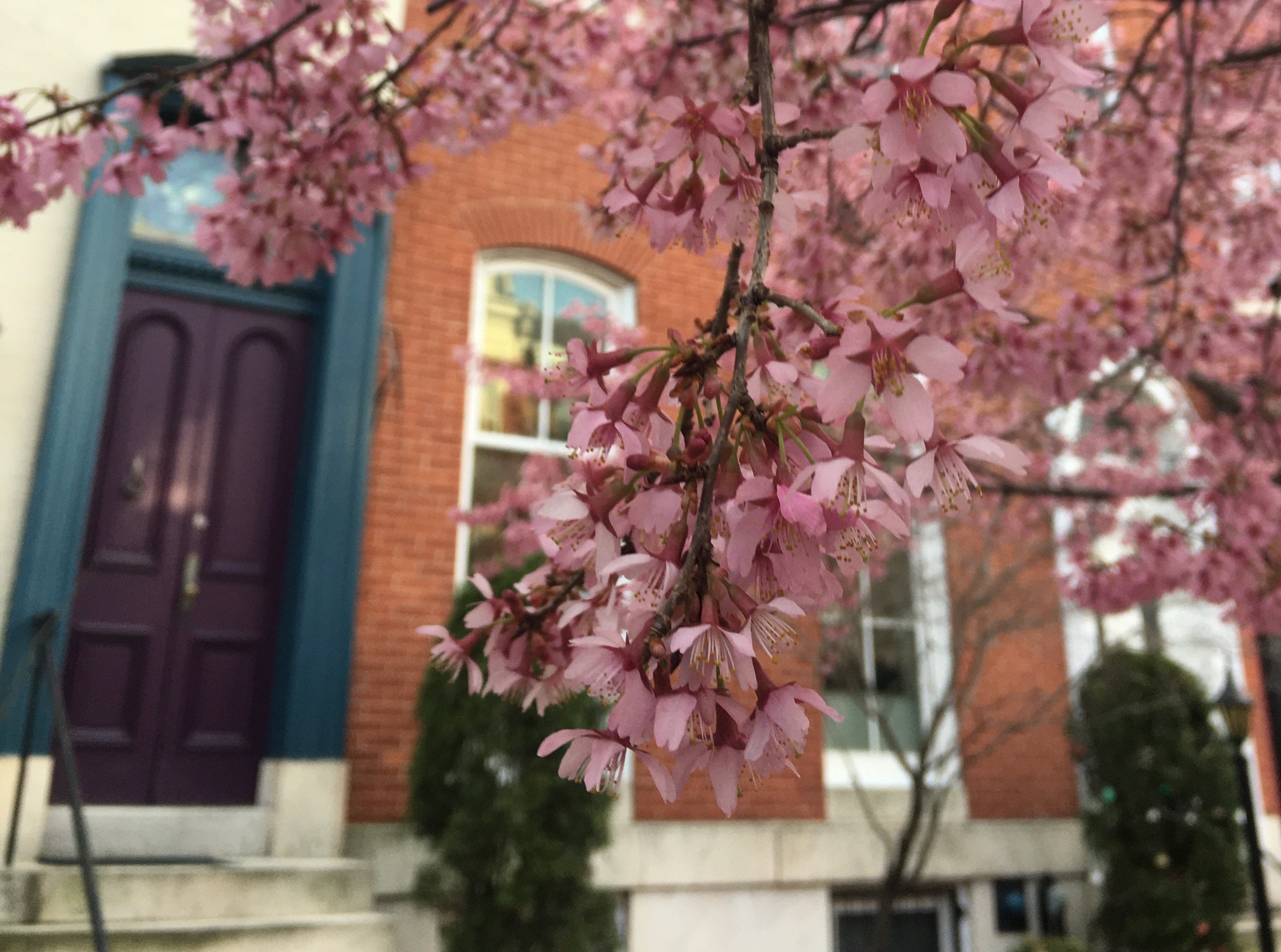
In Baltimore, there were also a few cherry trees in Maude’s neighborhood. Their pink-spangled branches prompted her to take her time walking down the hill to visit Margaret in the springtime. She would put on her sun hat and a nice dress and savor the stroll. Then the two would promenade amongst the rest of the burgeoning spring flowers until the brisk not-yet-summer air prompted them to convene in one apartment or the other for a long chat over tea. These were weekly outings, Sunday mornings that lingered into afternoons, but the ritual made them special occasions.
How could Maude ever express the importance of those afternoons? She and Margaret would philosophize and dream and plan and scheme until it was time to part ways. Then they would end up on a street corner halfway between their two separate houses, discussing for another hour, before they finally did head in separate directions. Rain or shine, spring or fall, three in the afternoon or three in the morning, they often found themselves on street corners with the intention of saying goodbye, but successfully managed to put off the farewell every time. It was departing—one headed up to Bolton Hill, the other back down to Mount Vernon—that made them wish aloud more than once that they still shared the same apartment. It would have been simpler, certainly. Convenient. Less chilly. But Maude cherished the street corner serendipity.
Springtime had a way of doing that. Its hopeful perfume made Maude feel more than ever as though she belonged. Those street corner partings, however, took on a bittersweet tinge as Maude’s departure overseas gradually became imminent. Once all the flowers had fallen and the trees, newly bare, sprouted a perfusion of green foliage; once the city took on its renewed full-bodied vitality; once it was time for everyone to come out from hiding and enjoy the outdoors, it was time for Maude to leave.
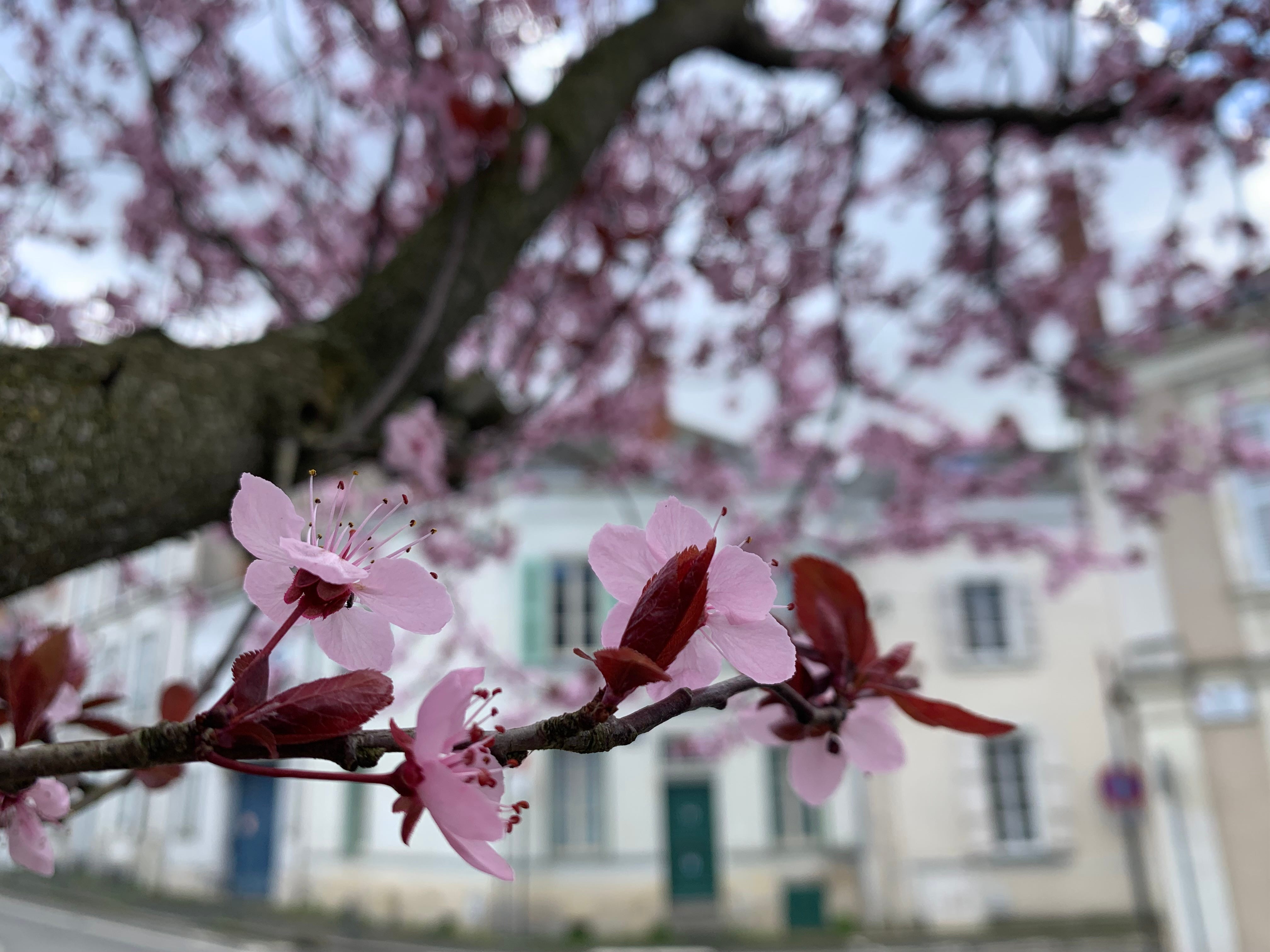
When the first crop of cherry trees traveled from Japan to the States in 1912, they perished during the long journey, having been sickened with rot. This simply prompted another gift from Japan to keep the promise of cherry trees. A second, larger shipload of the finest arboreal ambassadors survived, this time, to be replanted and continue thriving over a century later. Perhaps no one could have foreseen, in that glimmering, prosperous new century before the outbreak of two world wars, what would follow after those trees pledged a goodwill that transcended human hubris. Irrespective of the world order, the cherry blossoms continued to flourish on their own. Perhaps this says nothing beyond the stalwart resilience of nature in the face of mankind’s follies.
But anywhere the trees grew, there was some greater symbolism to the timing of cherry blossom season. Maude had seen the sakura in Hiroshima in April, the cherry blossoms in DC in March, and in her French river valley, a smattering of fleurs de cerisier appeared as early as February. In any and all cases, the flowers corresponded with the brisk, late-winter air of these varying climates. And the blooming trees always accompanied that gray, cloudy, brooding reluctance of winter giving over to spring. On the cusp of a new season, of blue expanses and warmth, the blossoms were, nevertheless, a beacon of hope and splendor to herald sunnier days to come.